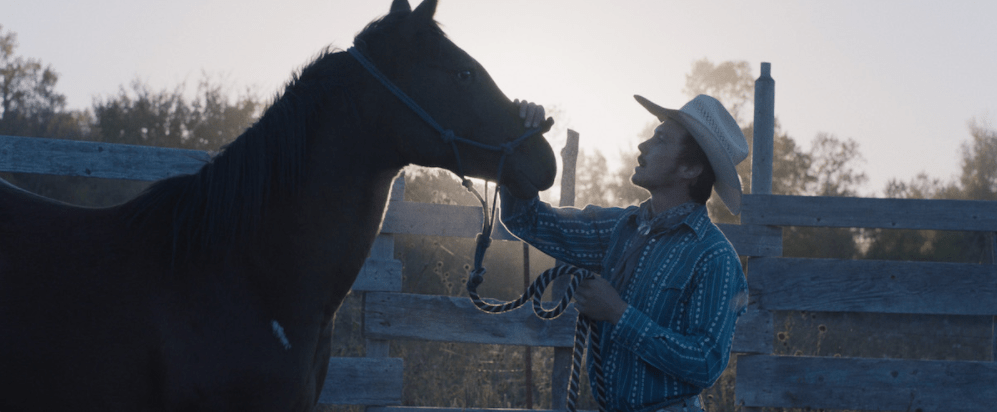
Towards the beginning of the pandemic, I started making my way through the watch list that had piled up since, well, forever. One of the entries on my list that seemed to always get pushed was Chloé Zhao’s 2018 film, The Rider. On a whim one day, I decided to watch it.
I haven’t stopped thinking about this film at least once a week since.
The plot to The Rider is simple – a bronc rider, Brady Blackburn, suffers a traumatic brain injury and is told he may never ride again. He then has to work through what his future and family will look like when he’s no longer bringing home that rider income.
Zhao’s skill with her craft is evident. The film, shot on a Lakota Sioux reservation in South Dakota, is breathtakingly beautiful. The lack of dialogue spoken versus the acting done with the eyes shows that she is more than capable of pulling great performances out of actors, which bodes well for her upcoming Marvel movie. You can tell she has a firm grasp on the story she wants to tell and how she wants it to look. All of this is evident – and then you start to look into how this film came to be.
Brady Blackburn is based on a real person – and one Zhao knew before his accident. She met Brady Jandreau while doing research for another film where he taught her how to ride a horse. She wanted to put him in a movie when they originally met, and following his accident, she based her second feature film on him.
Not only is Brady a real person, he’s actually played by Brady Jandreau. That’s right – Brady plays himself in this movie, which adds a whole new meta level to this film. Brady’s performance feels therapeutic to a degree. You’re watching a man whose entire life changed in a moment go back and relive, what I imagine, would be the hardest moments of his life for public consumption.
This movie would fit in a nice genre I’ve called neo-western. It’s delicate and it’s jagged. It’s beautiful and it’s haunting. If you watch, and I highly encourage you to do so, you’ll be just like me – thinking about certain scenes months after the first watch.
 LANE TALKS MOVIES
Leave a comment